
Hair Serums vs. Hair Oils — What’s Best for Your Hair Type?
Introduction to hair Serums Vs hair Oils
Hair care has evolved dramatically over the years. From traditional remedies passed down through generations to scientifically formulated products designed for modern lifestyles, people today have more options than ever when it comes to maintaining healthy, beautiful hair.
Among the most debated topics in hair care is the choice between hair serums and hair oils. Many people wonder:
- Should I use a serum or oil?
- Are they used for the same purpose?
- Which one is better for my hair type?
- Can I use both together?
The confusion is understandable. Both products promise smoother, shinier, healthier hair — yet they work in completely different ways.
Hair oils have been used for centuries in cultures around the world, particularly in South Asia, the Middle East, and Mediterranean regions. They are deeply rooted in traditional beauty rituals and are known for nourishing the scalp and strengthening hair from within.
Hair serums, on the other hand, are a more modern innovation. Designed with advanced cosmetic formulations, serums primarily work on the surface of the hair, providing instant shine, smoothness, and protection against environmental damage.
Understanding the difference between these two products Hair Serums Vs Hair Oils is essential for building an effective hair care routine. The truth is, neither is universally better than the other. The right choice depends on your hair type, hair concerns, lifestyle, and styling habits.
In this comprehensive guide of Hair Serums Vs Hair Oils, we will explore:
- What hair serums are and how they work
- What hair oils do for your hair and scalp
- Key differences between serums and oils
- Which product works best for specific hair types
- How to combine both for maximum benefits
- Expert tips for choosing the right product
By the end of this article, you will have a clear understanding of when to use hair serum, when to use hair oil, and how to choose the best option for your hair type.
Let’s begin by understanding hair serums.
Hair Serums Vs Hair Oils
What Is Hair Serum?
Hair serum is a lightweight, silicone-based or oil-infused styling product designed to coat the surface of the hair shaft. Unlike oils that penetrate deeper into the hair and scalp, serums primarily work as protective and smoothing agents.
Most hair serums are formulated with ingredients such as:
- Silicones (for smoothness and shine)
- Lightweight oils
- Vitamins
- Heat protectants
- Anti-frizz agents
- UV protection compounds
The main purpose of a hair serum is to improve the appearance and manageability of hair instantly.
Key Benefits of Hair Serum
- Instant Frizz Control
One of the most popular reasons people use hair serums is to control frizz. Humidity, dryness, and damaged hair cuticles can cause hair to appear rough and frizzy.
Hair serums create a smooth layer around each strand, sealing the cuticle and preventing moisture from causing frizz.
- Adds Shine and Smoothness
Dull hair often results from raised cuticles that scatter light unevenly. Hair serums smooth the cuticle surface, allowing light to reflect evenly and giving hair a healthy, glossy appearance.
- Protects Hair from Heat Styling
Many modern hair serums contain heat-protective ingredients. These help protect hair from damage caused by styling tools such as:
- Hair dryers
- Straighteners
- Curling irons
This protective layer reduces the risk of dryness, breakage, and split ends.
- Detangles Hair
Hair serum helps reduce friction between hair strands, making it easier to detangle knots after washing. This is particularly helpful for people with long, curly, or easily tangled hair.
- Shields Hair from Pollution
Environmental pollutants and dust can damage hair and cause dryness. Hair serums act as a barrier between hair strands and external pollutants.
What Is Hair Oil?
Hair oil is one of the oldest and most trusted hair care solutions used in beauty traditions around the world.
Unlike serums that work mainly on the hair surface, hair oils are designed to penetrate the hair shaft and nourish the scalp.
Hair oils are typically made from natural plant oils such as:
- Coconut oil
- Argan oil
- Almond oil
- Olive oil
- Castor oil
- Jojoba oil
Each oil has its own set of nutrients, fatty acids, and vitamins that support hair health.
Key Benefits of Hair Oil
- Deep Nourishment
Hair oils penetrate the hair shaft and provide deep nourishment. They help strengthen hair from within and improve elasticity, reducing breakage.
- Scalp Health
Healthy hair begins with a healthy scalp. Hair oils moisturize the scalp and help prevent common problems such as:
- Dry scalp
- Dandruff
- Irritation
- Flakiness
- Stimulates Hair Growth
Many oils improve blood circulation in the scalp when massaged regularly. This can encourage stronger and healthier hair growth over time.
- Reduces Protein Loss
Studies have shown that certain oils, particularly coconut oil, can reduce protein loss in hair. This helps maintain stronger hair structure.
- Protects Hair from Damage
Hair oils strengthen the hair shaft and provide a protective layer against environmental damage, including sun exposure and pollution.
Hair Serum vs. Hair Oil — Key Differences
Understanding the difference between hair serums vs Hair oils makes it easier to choose the right product for your needs.
| Feature | Hair Serum | Hair Oil |
| Primary Function | Styling and protection | Nourishment and treatment |
| Texture | Lightweight and silky | Thicker and richer |
| Application | After washing or styling | Before washing or overnight |
| Target Area | Hair strands | Hair and scalp |
| Result | Instant smoothness and shine | Long-term hair health |
In simple terms:
Hair oils treat your hair, while hair serums style and protect it.
Both products serve different purposes and can even complement each other in a hair care routine.
Which Is Best for Different Hair Types? Hair Serums Vs Hair Oils
Choosing between hair serum and hair oil depends largely on your hair type.
- Dry and Damaged Hair
Dry hair lacks moisture and often appears rough and dull. For this hair type, hair oils are extremely beneficial.
Oils help restore moisture, strengthen hair fibers, and reduce breakage.
Best options include:
- Coconut oil
- Argan oil
- Almond oil
Hair serum can still be used afterward to add shine and control frizz.
Best routine: Oil treatment + serum for finishing.
- Oily Hair
People with oily hair often avoid hair oils because they worry about making their hair look greasy.
In this case, lightweight hair serums are usually the better option.
They provide smoothness and shine without weighing hair down.
If oil is used, it should be applied sparingly and mainly on the hair lengths rather than the scalp.
- Curly Hair
Curly hair tends to be naturally dry because natural scalp oils have difficulty traveling down the curls.
Both hair serums Vs Hair oils can benefit curly hair.
Hair oil helps deeply nourish curls, while serum helps maintain curl definition and reduce frizz.
- Fine or Thin Hair
Fine hair can easily become flat and greasy if heavy products are used.
Lightweight hair serums are ideal for adding shine and smoothness without weighing hair down.
Heavy oils should be used cautiously.
- Thick or Coarse Hair
Thick hair often needs extra moisture and nourishment.
Hair oils work very well for this hair type because they provide deep hydration and manageability.
Serums can be used afterward to smooth the hair surface.
Can You Use Hair Serum and Hair Oil Together?
Yes, and in many cases using both products strategically can produce the best results.
A balanced routine may include:
- Applying hair oil before washing for nourishment.
- Washing hair with a gentle shampoo.
- Applying hair serum afterward to protect and style.
This combination allows you to benefit from both deep treatment and instant styling benefits.
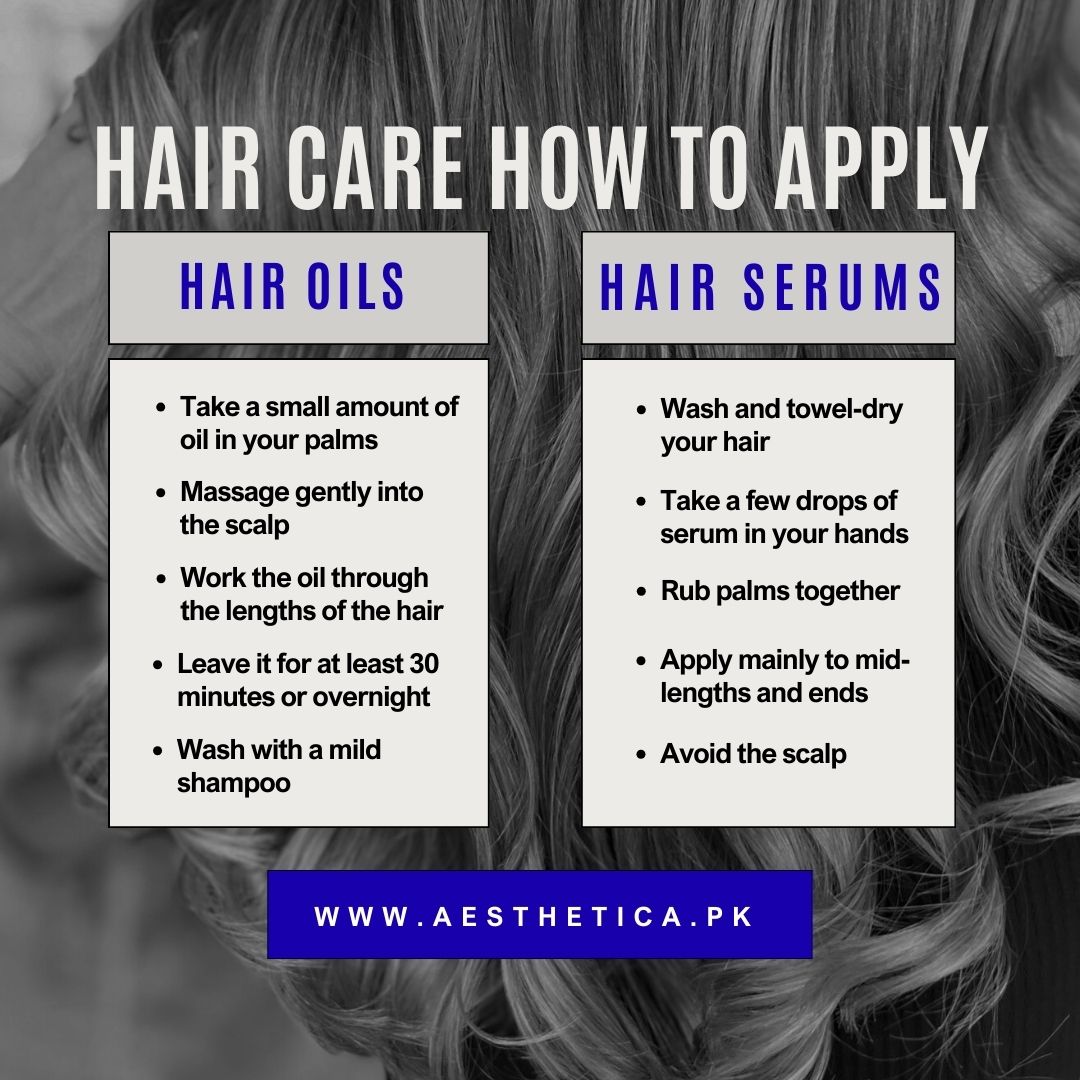
How to Apply Hair Oil Correctly
- Take a small amount of oil in your palms.
- Massage gently into the scalp.
- Work the oil through the lengths of the hair.
- Leave it for at least 30 minutes or overnight.
- Wash with a mild shampoo.
Regular oiling once or twice a week can significantly improve hair health.
How to Apply Hair Serum Correctly
- Wash and towel-dry your hair.
- Take a few drops of serum in your hands.
- Rub palms together.
- Apply mainly to mid-lengths and ends.
- Avoid the scalp.
Using too much serum can make hair look greasy, so less is always better.
Common Myths About Hair Serums Vs Hair Oils
Myth 1: Hair oil causes hair fall
Hair fall during oiling is usually due to weak hair that was already about to shed.
Proper oiling actually strengthens hair roots.
Myth 2: Serums repair damaged hair
Serums do not repair internal hair damage. They only improve appearance temporarily.
True repair requires nourishing treatments.
Myth 3: Oiling daily makes hair grow faster
Excessive oiling can clog pores and attract dirt. Moderation is key.
How to Choose the Right Product: Hair Serums Vs Hair Oils
When selecting hair serum or oil, consider:
- Your hair type
- Climate conditions
- Styling habits
- Ingredient quality
Look for products with beneficial ingredients such as:
For oils:
- Argan oil
- Coconut oil
- Almond oil
For serums:
- Vitamin E
- Lightweight botanical oils
- Heat protection ingredients
Avoid products with excessive harsh chemicals that may damage hair over time.
Final Verdict: Hair Serums or Hair Oils?
The answer is simple:
Hair oils nourish your hair, while hair serums perfect its appearance.
If your goal is long-term hair health, oils are essential.
If your goal is instant smoothness, shine, and styling control, serums are the better choice.
For many people, the best solution is not choosing one over the other but using both correctly.
By understanding your hair type and the purpose of each product, you can create a hair care routine that keeps your hair healthy, strong, and beautiful.
Conclusion
Hair care is not a one-size-fits-all process. What works perfectly for one person may not be ideal for another.
Hair Serums Vs Hair oils each have their own strengths. Oils focus on deep nourishment and scalp health, while serums provide instant smoothness, shine, and protection.
When used properly, these two products can complement each other and form the foundation of an effective hair care routine.
The key is understanding your hair type, your lifestyle, and the results you want to achieve.
With the right balance of nourishment and protection, you can enjoy hair that looks beautiful and feels healthy every day.
Frequently Asked Questions ( Hair Serums Vs Hair Oils )
Is hair serum better than hair oil?
Hair serum is better for styling, shine, and frizz control, while hair oil is better for nourishing the scalp and strengthening hair. Both serve different purposes and can be used together.
Can I use hair oil and hair serum together?
Yes. Many people apply hair oil before washing for nourishment and use hair serum after washing to control frizz and add shine.
Which is better for frizzy hair: serum or oil?
Hair serum is generally better for frizz control because it smooths the hair cuticle and protects against humidity.
Should I apply hair serum on wet or dry hair?
Hair serum is usually applied to damp hair after washing, but it can also be used on dry hair to smooth frizz and add shine.
Does hair oil help with hair growth?
Hair oils can support hair growth by nourishing the scalp and improving blood circulation when massaged regularly.