
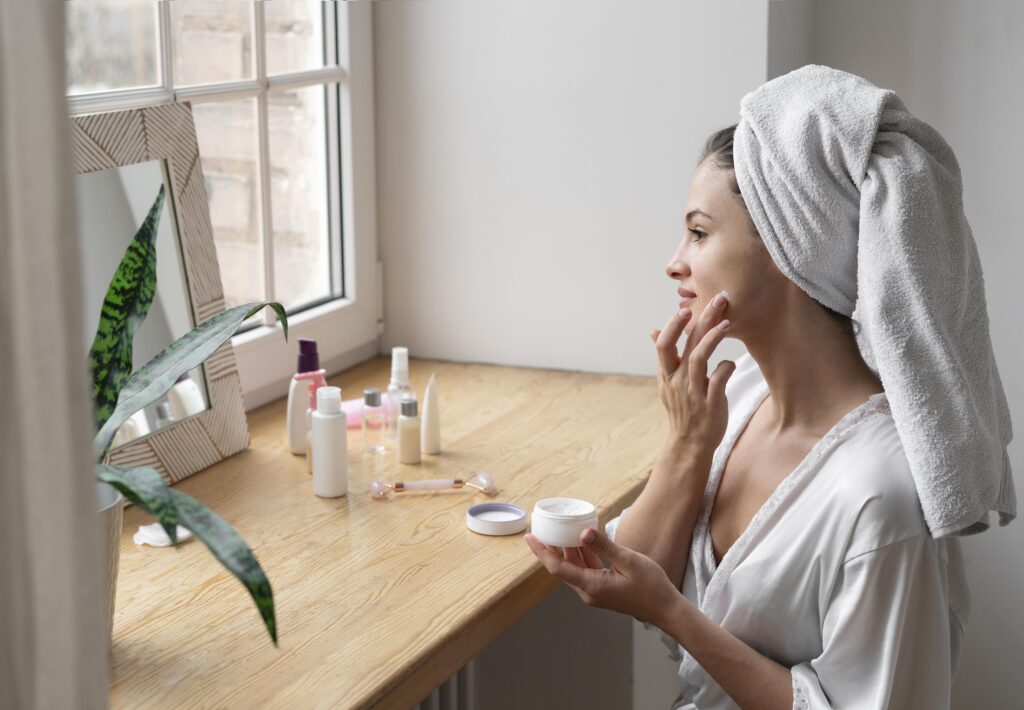
How to Build a Skincare Routine That Actually Suits Your Skin Type
Introduction: Why Your Skincare Routine Should Never Be “One-Size-Fits-All”
Walk into any beauty aisle, and you’ll find hundreds of products promising glow, youth, radiance, and everything in between. But the truth is simple: no product can work for everyone.
Why? Because every skin type behaves differently, and what transforms one person’s skin can irritate another’s.
A perfect skincare routine is not about using expensive products or following the latest influencers. It’s about understanding your skin type, knowing what it needs, and creating a consistent routine that supports its natural behavior.
In this blog, we’ll break down how to build a skincare routine that’s realistic, effective, and uniquely suited to your skin.
Step 1: Identify Your Real Skin Type
Before thinking about products, you must understand your skin’s personality. Most people think they know their skin type, but many are actually wrong — and this leads to choosing products that don’t work.
Here are the major skin types and how to identify them:
1. Oily Skin
Signs:
- Skin gets shiny within 1–2 hours after washing
- Enlarged or visible pores
- Frequent pimples or blackheads
- Makeup melts quickly
What it needs:
Balance. Not stripping. Not over-hydrating. Oily skin thrives when oil production is controlled gently, not aggressively.
2. Dry Skin
Signs:
- Tight feeling after cleansing
- Rough texture
- Visible flakiness or dullness
- Fine lines that look more prominent
What it needs:
Hydration and nourishment. Dry skin requires ingredients that lock in moisture and strengthen the barrier.
3. Combination Skin
Signs:
- Oily T-zone (forehead, nose, chin)
- Normal or dry cheeks
- Occasional breakouts in oily zones
What it needs:
A balanced approach — oil-control in the T-zone and hydration everywhere else.
4. Normal Skin
Signs:
- Rare breakouts
- Balanced oil and hydration levels
- Small pores
- Smooth texture
What it needs:
Maintenance. Don’t complicate a naturally happy skin barrier.
5. Sensitive Skin
Signs:
- Redness
- Stinging or burning from many products
- Reacts quickly to fragrances, dyes, or strong actives
What it needs:
Simplicity. Calm, gentle, fragrance-free care with soothing ingredients.
Step 2: Understand the Purpose of Each Skincare Step
A skincare routine doesn’t need 10 products. It only needs the right products in the right order. Here’s the structure of a routine that works for everyone:
Cleansing removes dirt, oil, sweat, and sunscreen.
The golden rule: Your skin should feel soft after washing, never tight.
Best cleansers by skin type:
- Oily: Gel or foaming cleanser
- Dry: Cream or hydrating cleanser
- Combination: Gentle gel cleanser
- Sensitive: Fragrance-free, non-lathering cleanser
2. Toner (Optional but useful)
Modern toners hydrate, calm, or gently exfoliate. Skip toners with alcohol.
Best toners by skin type:
- Oily: BHA or niacinamide toners
- Dry: Hyaluronic acid or glycerin toners
- Sensitive: Rose water, centella, chamomile
3. Serum (AM or PM depending on ingredients)
Serums are the treatment step — this is where real transformation happens. They target pigmentation, wrinkles, acne, dehydration, etc.
Choose serums according to skin needs:
- Hydration: Hyaluronic Acid
- Brightening: Vitamin C
- Anti-aging: Retinol
- Oil control: Niacinamide
- Acne: Salicylic Acid
4. Moisturizer (AM & PM)
Moisturizing is important for all skin types, even oily skin. A moisturizer locks in hydration and supports your skin barrier.
Best moisturizers by skin type:
- Dry: Thick creams
- Oily: Gel moisturizers
- Combination: Lightweight lotion
- Sensitive: Minimal-ingredient moisturizers
5. Sunscreen (AM)
Sunscreen is non-negotiable. No routine will work without it because UV damage causes pigmentation, wrinkles, dehydration, and aging.
- Must be SPF 50
- Reapply every 2–3 hours
- Choose gel sunscreens if oily/combination
Step 3: Build a Routine for Your Exact Skin Type
Now that you know the essentials, let’s create personalized routines How to Build a Skincare Routine That Actually Suits Your Skin Type
1. Routine for Oily Skin
Morning
- Gel cleanser
- Niacinamide serum (10%)
- Oil-free gel moisturizer
- SPF 50 gel sunscreen
Night
- Gentle cleanser
- BHA serum (2% salicylic acid)
- Lightweight moisturizer
Key Tips for Oily Skin:
✔ Don’t overwash — it increases oil
✔ Avoid heavy oils
✔ Use clay masks 1–2 times a week
2. Routine for Dry Skin
Morning
- Cream cleanser
- Hydrating toner
- Hyaluronic Acid serum
- Ceramide moisturizer
- Sunscreen
Night
- Cream cleanser
- Hydrating toner
- Vitamin C or peptide serum
- Deep nourishing moisturizer
Key Tips for Dry Skin:
✔ Avoid foaming cleansers
✔ Add facial oils (argan or rosehip)
✔ Use hydrating masks twice a week
3. Routine for Combination Skin
Morning
- Gel cleanser
- Hydrating toner
- Niacinamide serum
- Lightweight moisturizer
- Sunscreen
Night
- Cleanser
- BHA serum on T-zone
- Hyaluronic acid all over
- Balanced moisturizer
Key Tips for Combination Skin:
✔ Multi-mask (clay on T-zone, hydration on cheeks)
✔ Avoid heavy products on T-zone
4. Routine for Normal Skin
Morning
- Gentle cleanser
- Vitamin C serum
- Moisturizer
- Sunscreen
Night
- Cleanser
- Hydrating toner
- Lightweight serum (niacinamide/peptides)
- Moisturizer
Key Tips:
✔ Keep it simple
✔ Prevent, don’t treat
5. Routine for Sensitive Skin
Morning
- Very gentle cleanser
- Soothing toner (no fragrance)
- Centella or niacinamide serum
- Barrier-repair moisturizer
- Sunscreen (mineral preferred)
Night
- Cleanser
- Chamomile or aloe toner
- Serum (optional)
- Thick calming moisturizer
Key Tips:
✔ Patch test everything
✔ Avoid retinol initially
✔ Look for words like “non-comedogenic”, “hypoallergenic”, “fragrance-free”
Step 4: Understand Active Ingredients (So You Choose Wisely)
Every ingredient plays a role. Here are the most important ones and what they do:
1. Hyaluronic Acid – Hydration Hero
Draws water into the skin. Great for dryness, dullness, and dehydration.
2. Vitamin C – Brightening & Anti-aging
Targets pigmentation, uneven skin tone, sun damage, and boosts collagen.
3. Retinol – The Master Anti-Aging Ingredient
Reduces wrinkles, fine lines, acne, and improves texture. Must be introduced slowly.
4. Niacinamide – The All-Rounder
Controls oil, reduces pores, brightens and strengthens the barrier. Good for all skin types.
5. Salicylic Acid (BHA) – Acne Fighter
Unclogs pores, reduces blackheads, exfoliates deep inside oil glands.
6. AHAs – Glow Enhancing Acids
- Glycolic Acid
- Lactic Acid
These help with glow, texture, and pigmentation.
Step 5: How to Introduce New Products (Without Irritation)
Most skin problems happen because people use too many new products at once. Here’s the correct way:
✔ Add one new product at a time
✔ Patch test on your jawline
✔ Use actives only 2–3 times per week initially
✔ Increase gradually if no irritation
✔ Always use sunscreen with vitamin C, AHAs, BHAs, retinol
Step 6: Consistency Is More Important Than Quantity
A perfect routine is not about using 10 products — it’s about using 3–4 right ones consistently for at least:
- 4–6 weeks for hydration
- 8 weeks for acne
- 12+ weeks for pigmentation
- 3–6 months for anti-aging results
Skin transformation is slow but long-lasting.
Step 7: Common Skincare Mistakes to Avoid
❌ Over-exfoliating
Causes redness and sensitivity.
Use acids only 2–3 times a week.
❌ Skipping sunscreen
Most pigmentation and aging come from UV, not products.
❌ Using too many actives
Vitamin C, AHAs, BHAs, retinol — all together — can irritate the skin.
❌ Not moisturizing oily skin
Oily skin still needs hydration.
❌ Expecting overnight results
Real results require patience and consistency.
Conclusion: Your Skin, Your Routine
Building a skincare routine that suits your skin type is not complicated—it’s about understanding your skin, choosing the right products, and following a consistent routine.
Remember:
- Start simple
- Listen to your skin
- Make slow, thoughtful changes
- Protect your skin every single day
Healthy skin is not a trend — it’s a long-term investment in your confidence and well-being.